Once I realised vermouth was something you could actually make yourself, curiosity very quickly turned into experimentation.
I started reading everything I could find – old recipes, historic references, modern approaches, and the occasional obscure forum discussion. Vermouth has existed in one form or another for centuries, and recipes have changed dramatically over time. Some early formulas were intensely medicinal, others were surprisingly simple, while modern producers often take a much more culinary approach.
Rather than copying any one recipe, I treated them more like guideposts. They helped me understand structure, balance, and the role different elements played in shaping flavour. From there, I continued experimenting in my own kitchen.
Over time I must have made around twenty different versions. Some were interesting. Some were terrible. A few were promising but clearly unfinished. Each batch taught me something – about balance, about extraction, about patience, and about how small adjustments could completely change the character of the final drink.
I also leaned on something I’ve always enjoyed doing: cooking. Years of experimenting in the kitchen meant I was comfortable playing with flavour, trusting instinct, and trying unconventional ideas to coax more character out of ingredients.
All the while, I had a clear goal in mind: Vermouth is often treated as a supporting character. It appears in cocktail recipes, sits quietly behind the bar, or occasionally finds its way into a sauce for seafood. But I kept wondering whether it deserved more attention than that.
Could vermouth be the star of the glass? Could it be made rich, balanced and indulgent enough to sip slowly, the way you might enjoy a good brandy, sherry, or port?
That idea became the guiding principle behind my experiments. I wasn’t trying to create a vermouth designed purely for mixing. I wanted something that could comfortably sit centre-stage.
Eventually, after many trials, I landed on a recipe that felt right. It had balance, depth, and a character I genuinely wanted to drink. More importantly, it was something I could reproduce consistently.
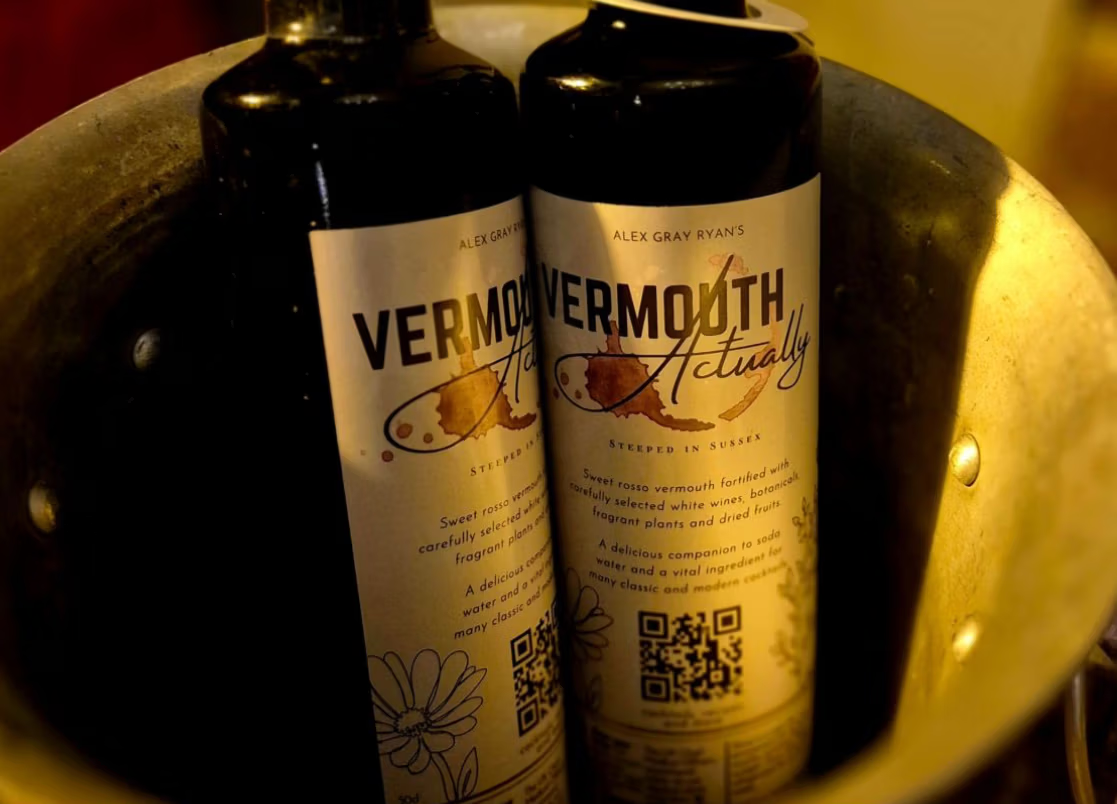
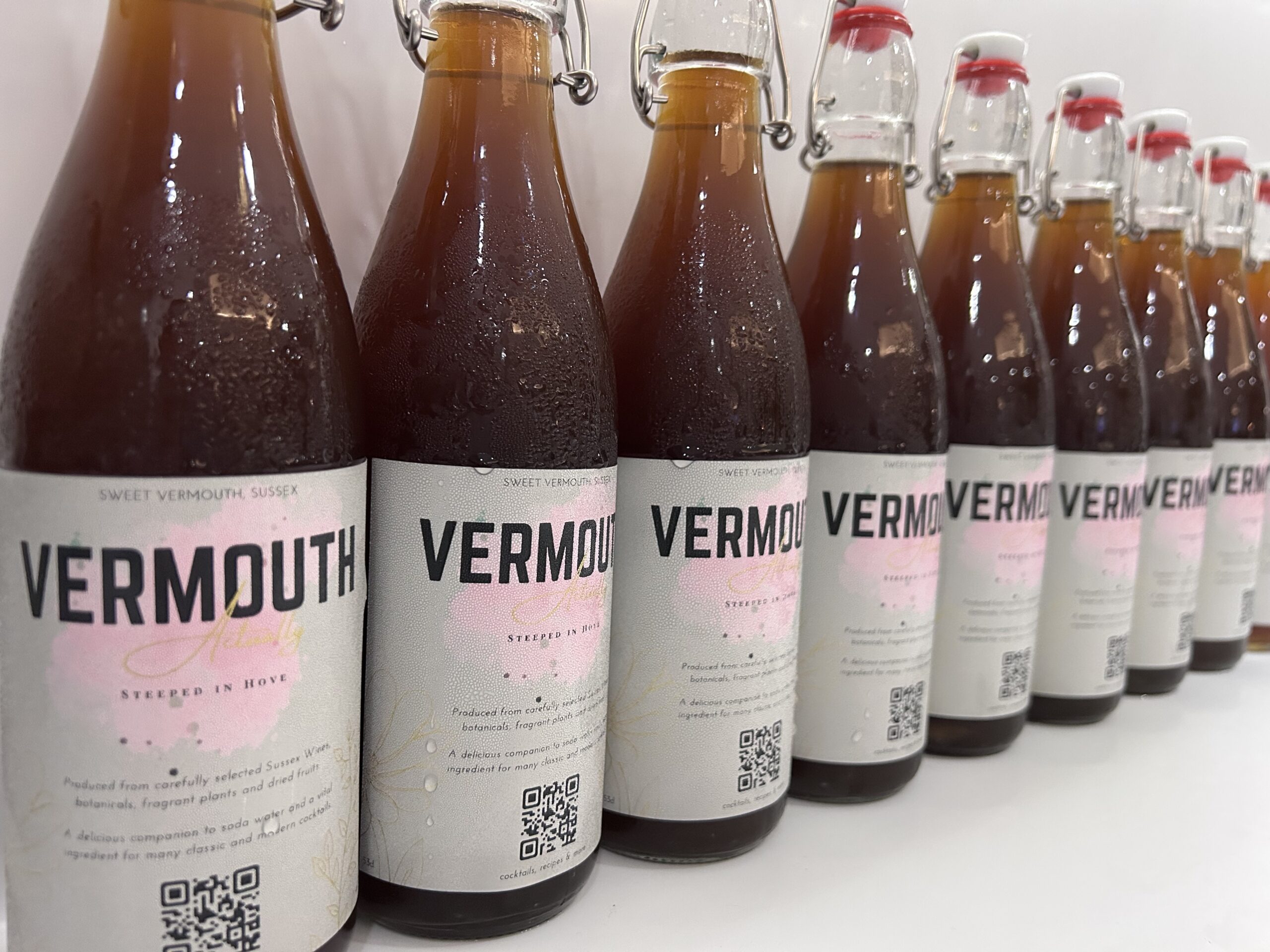
In Christmas 2023, I decided to make a small batch as gifts for friends and family. Just twelve bottles in total – nothing fancy, just something homemade and thoughtful to share.
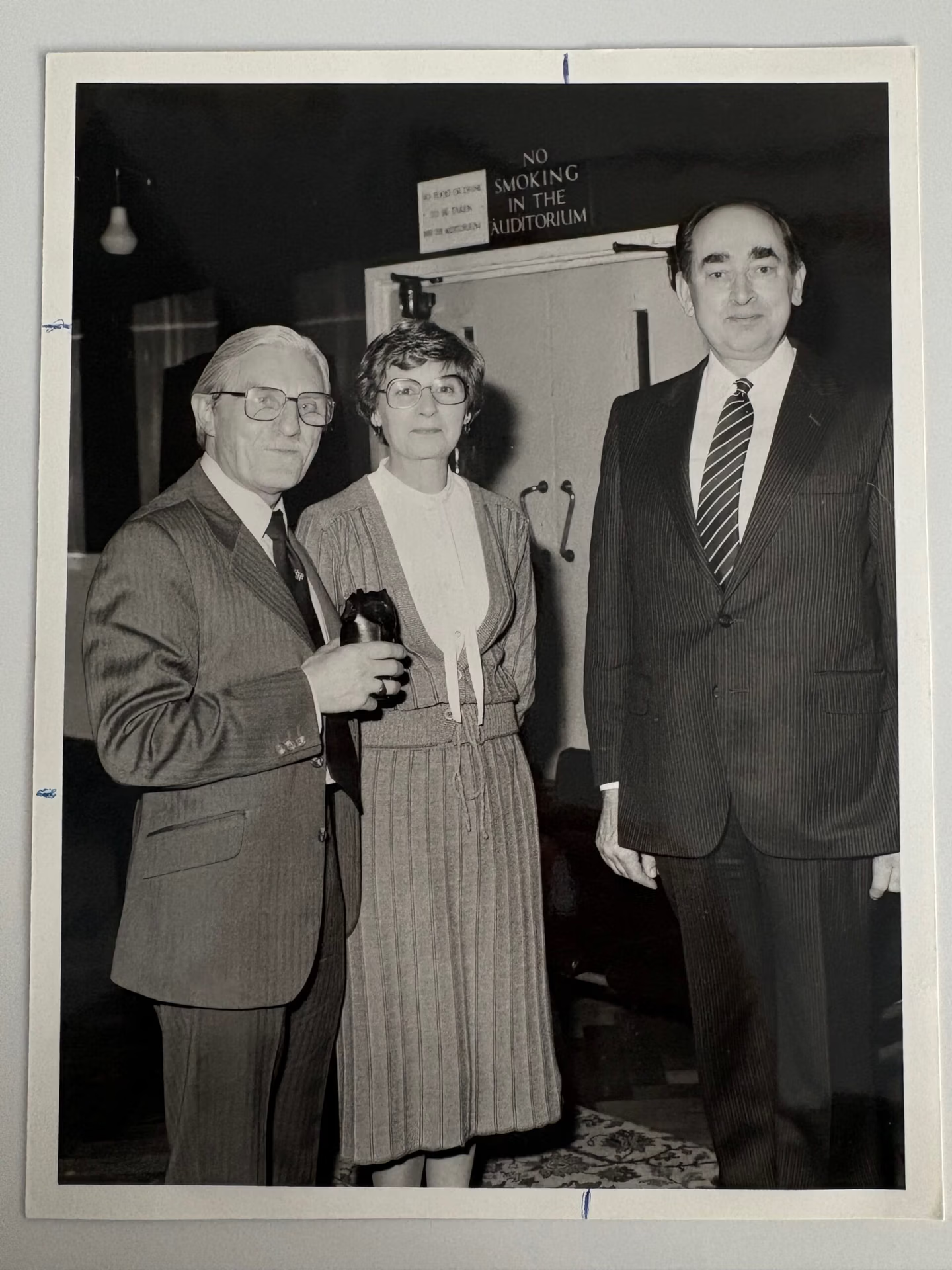
When gifting a bottle to my parents, my mother recognised something about the drink and mentioned her parents, my grandparents, connection to vermouth that I had forgotten. It was a small reminder, but an intriguing one – and it suddenly made me wonder whether my instinctive gravitation towards vermouth all those years earlier might not have been entirely random after all.
At the time, though, I still didn’t think of the project as anything more than a personal hobby. A few recipients suggested it was tasty enough to sell commercially, but I looked into the requirements for making and selling vermouth legally and it was a minefield! Classic ADHD – I started something wonderful, did the fun bits, but ran a mile when it came to paperwork!
I left the project there in early 2024 – it was simply something I enjoyed making, sharing, and refining.