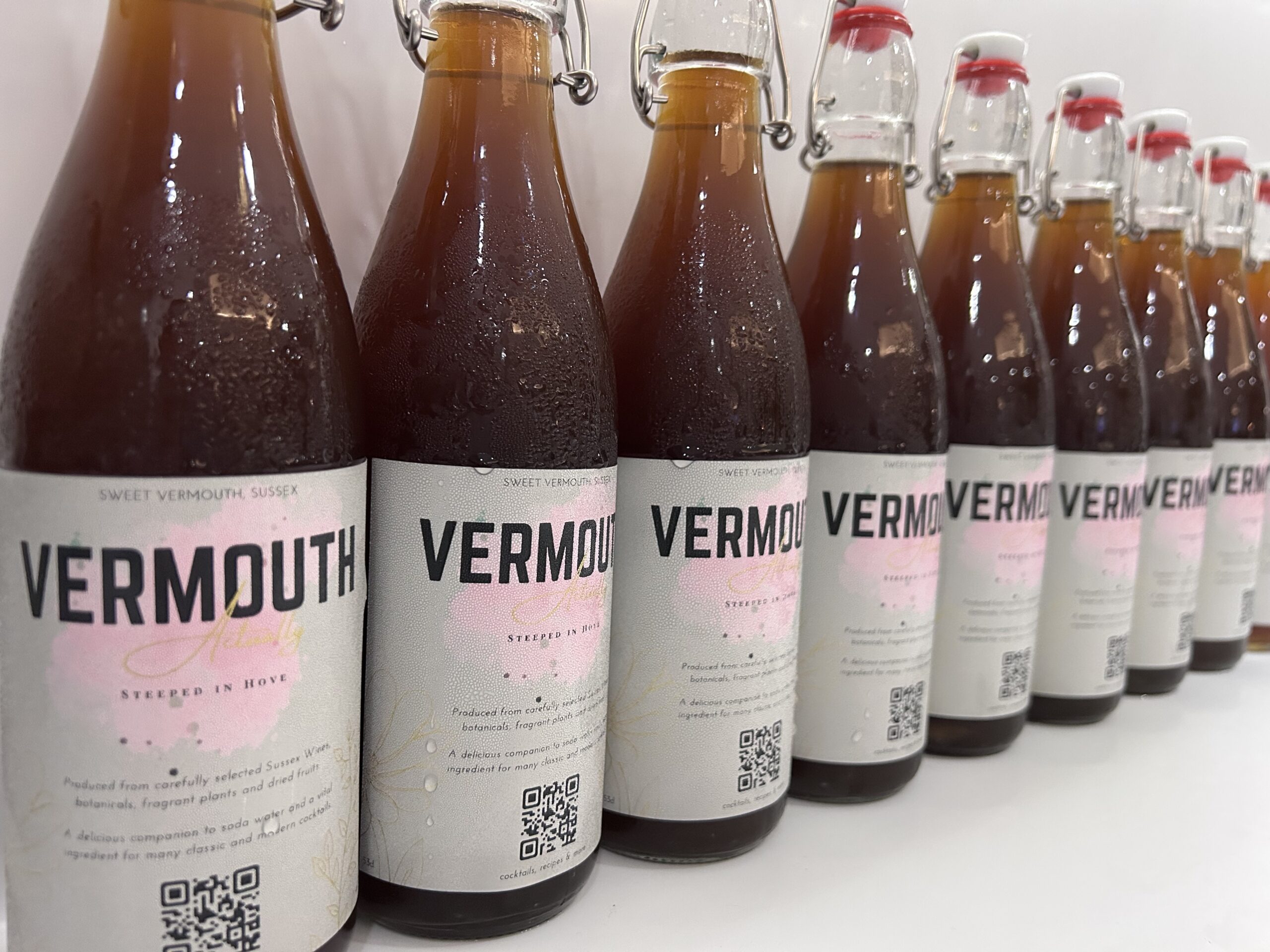

Like a lot of good things in life, my relationship with vermouth started completely by accident.
For years, whenever I travelled abroad, I seemed to develop a mildly irritating but persistent problem – indigestion. Probably underlying stress or anxiety. Nothing dramatic, just enough discomfort to make enjoying food and wine a little less fun than it should have been. I tried all the usual solutions: medicine, different foods, smaller meals, avoiding certain drinks. Nothing really worked.
There was even one occasion where it REALLY ruined my night. We had booked into one of the world’s most famous restaurants – The French Laundry, a 3 Michelin Star restaurant in Napa Valley, California – a once-in-a-lifetime reservation. It’s hard to get in to, painfully expensive and, obviously, we’re not in Napa Valley very often!
My indigestion had kicked off early, and I tried to ignore it. Unfortunately, as is so often the case with anxiety, it can be a bit of a catch 22 / vicious circle. The underlying travel anxiety caused the indigestion, and the indigestion doubled my anxiety, in particular, about whether I’d actually be able to eat anything at this amazing restaurant.
No surprises for guessing that it was a flop. We arrived, had a cocktail (which I struggled to get down me), then we sat down and ordered an incredible bottle of wine. The first of 11 courses arrived and I managed to eat it, but couldn’t enjoy it, and before the second course arrived I gave up.
Thankfully the restaurant team were amazing. They only charged us for the bottle of wine and ordered us a taxi. They could have easily have billed us for the full tasting menu that we’d booked in for – one of the most sought-after reservations in the world – but they didn’t, incredibly kind.
A small shout-out here to my partner, John, for whom this was NOT the first restaurant we exited in a hurry. I actually remember one night in Saint Lucia where we’d booked one night away from my family vacation so we could have a date night… and I ended up laying on the beach outside the restaurant while John eat on his own inside – he was too hungry to leave on that occasion!
Some time after while on another adventure and feeling the all-too-familiar early-evening indigestion, I ordered something I hadn’t really paid much attention to before – a vermouth and soda.
It was a simple drink. Vermouth over ice, topped with sparkling water, a slice of orange. But something about it just worked. The gentle bitterness, the herbs, the balance of wine and botanicals – it seemed to settle my stomach almost immediately.
More importantly, it tasted incredible and seemed to ‘fit’ me. There was something familiar about it, something comforting. I’d later realise I had a family connection to vermouth – read more here!
That moment sparked a curiosity. What actually was vermouth? I’d seen it plenty of times behind cocktail bars, usually lurking in the background of drinks like a Martini or a Negroni, and I knew that white vermouth was often used in cooking with seafood, sometimes pork, but I’d never really thought about it as something to drink on its own.
The more I travelled, the more I started ordering it. Different countries, different styles, different producers. Some were bright and citrusy, others dark and spicy. Some leaned herbal, others bitter, others sweet. It quickly became clear that vermouth wasn’t just one thing – it was an entire world of flavours built on wine, herbs, spices, roots and botanicals.
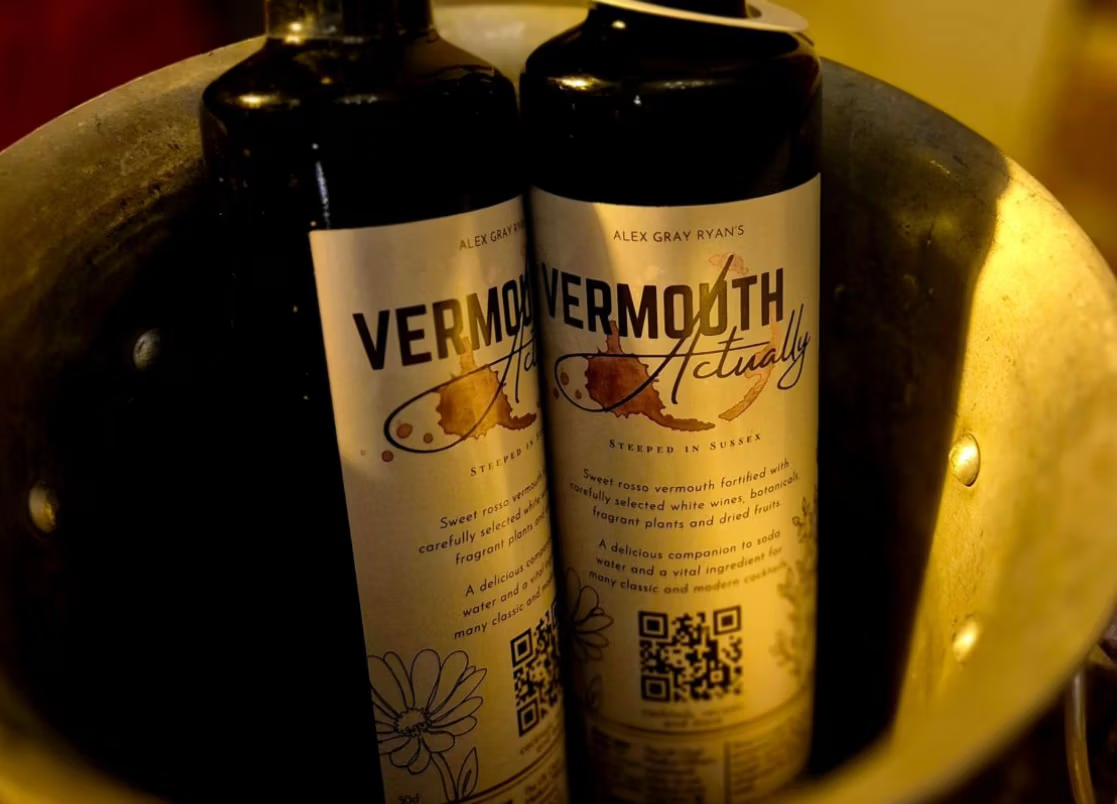
And that raised another question in my mind: if vermouth is essentially wine infused with botanicals… could you make it yourself?
Back home, curiosity turned into experimentation. I started reading about traditional ingredients, the history of aromatised wines, and the role of botanicals like wormwood, citrus peel, herbs, spices and barks. Vermouth had originally been created as a kind of tonic – part apéritif, part remedy – and that heritage suddenly made a lot of sense.
What began as a drink that happened to soothe my stomach had become something much more interesting.
Before long, I found myself buying bottles of wine not just to drink, but to experiment with. Jars of herbs and spices started appearing in the kitchen. Early infusions were made, tasted, adjusted and re-thought.
At that point, I didn’t have a finished recipe, nor any aspirations that I would ever make it for anyone other than myself, and certainly not the faintest idea that it might turn into something bigger.
I just had curiosity, a kitchen full of botanicals, and a growing fascination with vermouth.
And that’s where it all began.